Content
Open woodlands and forest-steppes are among the biologically richest yet highly
endangered ecosystems in the temperate zone. The conservation of open woodlands and
forest-steppes requires an understanding of the factors that determine the occurrence of
functionally important organisms closely related to specific environmental conditions.
Among these organisms are spiders, constituting the most diverse group of invertebrate
predators with distinct environmental requirements. The biodiversity of spiders is
influenced by both habitat-related factors (local factors) and landscape-related factors
(landscape factors). However, there exists a notable gap in knowledge regarding the
effect of these factors on spider biodiversity in temperate deciduous forests and foreststeppe
ecosystems. The doctoral thesis comprises four studies. Three of these studies
aim to compare the effect of forestry treatments on the biodiversity of ground-dwelling
spiders in formerly open woodlands of the Czech Republic. The first study examines the
different canopy thinning intensities (Děvín NNR), the second study evaluates different
successional stages following canopy thinning (Podyjí NP), and the third study
compares the retention forestry using dispersed retention against clear-cutting (Lower
Morava Biosphere Reserve). The fourth study investigates the effect of habitat type and
landscape-scale heterogeneity on ground-dwelling spider biodiversity in the natural
forest-steppes of Kiskunság NP in Hungary.
The first study demonstrated a positive effect of canopy thinning on spider
biodiversity. The second study indicated the significance of different successional
stages for distinct assemblages. Strong thinning and advanced successional stage
supported the highest biodiversity of spiders, including species of conservation concern.
The third study revealed that both retention forestry and clear-cutting homogenise
spider assemblages. However, retention forestry supported higher biodiversity than
clear-cutting. The fourth study showed that habitat type plays a more important role
than landscape structure in shaping spider assemblages in natural forest-steppes. Each
component of the forest-steppes (forest, forest edge, grassland) contributes significantly
to the conservation of spider biodiversity.
This doctoral thesis presents results that can be practically applied to protect the
biodiversity of lowland woodlands and forest-steppes. An effective approach to forest
management in protected lowland woodlands involves a combination of various
thinning intensities and the maintenance of diverse successional stages. Retention
forestry, utilizing dispersed retention, emerges as a suitable alternative to clear-cutting
in lowland commercial woodlands. The conservation management strategies for each
forest-steppe habitat should be adapted individually.
Citation
Hamřík T. (2024): Local and landscape factors affecting the biodiversity of spiders in temperate deciduous forest and forest-steppe ecosystems. Ph.D. theis, Mendel University, Brno, pp.

Online atlas
Society
Spiders
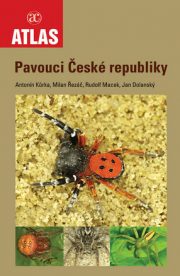
Pavouci České republiky