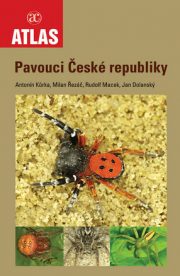
| Nálezy podle období | |||||
|---|---|---|---|---|---|
| Gnaphosidae | 0-1900 | 1901-1950 | 1951-2000 | 2001+ | ∑ |
| Haplodrassus soerenseni (Strand, 1900) Téměř ohrožený | 97× | 16× | 113× | ||
| České jméno | skálovka Sörensenova |
|---|---|
| Stupeň ohrožení | Téměř ohrožený |
| Nálezy | 113 nálezů, 35 kvadrátů |
| První nález |
1972, J. Buchar, Buchar & Růžička 2002 (databáze) |
| Poslední nález | 2025 , Antonín Kůrka, Kryštof Rückl |
| Areál rozšíření | Palaearctic - Transp., eM |
| Fytogeografická oblast |
|
| Původnost stanovišť |
|
| Vlhkost stanovišť |
|
| Stratum |
|
| Osvětlení stanovišť |
|
| Hojnost výskytu |
|
| Nadm. výška | 0-800 |
Heterogeneity of environmental conditions is the crucial factor supporting biodiversity in various habitats, including post-mining sites. The effects of micro-topographic heterogeneity on biodiversity and conservation potential of arthropod communities in post-industrial habitats had not been studied before now. At one of the largest European brown coal spoil heaps, we sampled eight groups of terrestrial arthropods with different life strategies (moths, spiders, ground beetles, ants, orthopteroids, centipedes, millipedes, and woodlice), in successionally young plots (5–18 y), with a heterogeneous wavy surface after heaping, and compared the communities with plots flattened by dozing. A combination of the standardized quantitative sampling, using two different methods, and a paired design of the plot selection enabled a robust analysis. Altogether, we recorded 380 species of the focal arthropods, 15 of them nationally threatened. We revealed the importance of the microtopographic heterogeneity for the formation of the biodiversity of arthropods in their secondary refuges. The communities with higher biodiversity and conservation value were detected in the plots with heterogeneous surfaces; exceptions were ground beetles and millipedes. The surface flattening, often the first step of technical reclamation projects, thus suppress biodiversity of most terrestrial arthropods during the restoration of post-mining sites. Since the communities of both surface types differed, the proportional presence on both surfaces could be more efficient in supporting the local biodiversity. We suggest reducing the surface dozing for the cases with other concerns only, to achieve a proportional representation of both surface types. Such a combination of different restoration approaches would, thus, efficiently support high biodiversity of groups with various needs.
| Haplodrassus soerenseni (Strand, 1900) LC | Samci | Samice | Mláďata | Nálezy |
|---|---|---|---|---|
| Zemní past | 165 | 48 | 4 | 96 |
| Prosev | 1 | 1 | 1 | 3 |
| Neurčeno | 1 | 8 | 0 | 13 |
| Individuální sběr | 0 | 1 | 0 | 1 |
| Samci | Samice | Mláďata | Nálezy |
| Haplodrassus soerenseni (Strand, 1900) LC | Samci | Samice | Mláďata | Nálezy |
|---|---|---|---|---|
| Stepi, vřesoviště, písčiny | 1 | 1 | 0 | 2 |
| Neurčeno | 12 | 11 | 0 | 20 |
| Reliktní bory na skalách | 3 | 0 | 1 | 3 |
| Suché doubravy | 38 | 13 | 4 | 17 |
| Lesy | 4 | 1 | 0 | 3 |
| Ovocné sady s luční vegetací | 1 | 1 | 0 | 1 |
| Lužní lesy nížin | 0 | 1 | 0 | 1 |
| Výsadby jehličnanů | 20 | 11 | 0 | 14 |
| Haldy a výsypky | 1 | 0 | 0 | 1 |
| Stojaté a pomalu tekoucí vody | 1 | 0 | 0 | 1 |
| Mokřadní olšiny | 5 | 0 | 0 | 2 |
| Mokré louky | 1 | 2 | 0 | 2 |
| Výsadby listnáčů | 5 | 1 | 0 | 3 |
| Porosty borůvek | 0 | 0 | 0 | 1 |
| Rašelinné bory | 1 | 0 | 0 | 2 |
| Rašeliniště | 0 | 1 | 0 | 1 |
| Acidofilní bory | 9 | 4 | 0 | 6 |
| Rákosiny a orobincové porosty stojatých vod | 0 | 1 | 0 | 1 |
| Paseky | 8 | 1 | 0 | 3 |
| Bučiny nižších poloh | 39 | 4 | 0 | 14 |
| Přirozené lesy | 10 | 2 | 0 | 6 |
| Luční ostřicové mokřady | 2 | 0 | 0 | 2 |
| Lesostepní doubravy | 2 | 1 | 0 | 2 |
| Suché louky | 0 | 2 | 0 | 1 |
| Polní biotopy | 1 | 0 | 0 | 1 |
| Močály | 1 | 0 | 0 | 1 |
| Lesní okraje | 2 | 0 | 0 | 2 |
| Samci | Samice | Mláďata | Nálezy |